









Step-by-Step Guide to Planning a Funeral Checklist – Helpful Guide & Resources

Planning a funeral can be an overwhelming and emotional experience, especially when dealing with the loss of a loved one. To help make this process more manageable, creating a funeral checklist can provide a structured approach to ensure nothing is overlooked during this difficult time.

Step 1: Gather Essential Information

Start by collecting important information such as the deceased’s full name, date of birth, and social security number. You will also need to gather details about any pre-arranged funeral plans, insurance policies, and relevant documents.

Step 2: Notify Relevant Parties

Notify immediate family members and close friends about the passing of your loved one. Make sure to contact the funeral home or director to begin making arrangements. It’s also essential to get in touch with the deceased’s employer, attorney, and financial institutions if applicable.

Step 3: Choose a Funeral Home

Research local funeral homes and choose one that aligns with your preferences and budget. Meet with the funeral director to discuss the services they offer, pricing, and any personal touches you’d like to include in the funeral.

Step 4: Plan the Ceremony

Determine whether the funeral will be a burial, cremation, or memorial service. Decide on the location, date, and time of the ceremony. Arrange for clergy, speakers, musicians, and any special readings or rituals that you’d like to include.

Step 5: Create a Budget

Creating a budget for the funeral can help you manage costs and avoid overspending. Consider expenses such as the casket or urn, funeral service fees, flowers, transportation, obituary notices, and catering for the reception.

Step 6: Compile a Guest List

Decide who you would like to invite to the funeral and any related gatherings. Make sure to include contact information for guests so that you can keep them updated on the arrangements.

Step 7: Arrange for Burial or Cremation

If the deceased has not specified their preferences, you’ll need to decide whether to proceed with burial or cremation. Organize transportation to the cemetery or crematorium and consider any religious or cultural customs that should be observed.

Step 8: Review and Finalize the Checklist

Review your funeral checklist to ensure that all necessary tasks have been completed. Make any final adjustments or additions as needed. Having a detailed checklist can help you stay organized and alleviate some of the stress associated with funeral planning.

Conclusion

Planning a funeral checklist may seem like a daunting task, but breaking it down into manageable steps can make the process more straightforward. By following these steps and staying organized, you can create a meaningful and personalized farewell for your loved one.

For a detailed guide on planning a funeral checklist, visit Quick Funeral. Take the time to honor your loved one in a way that reflects their life and legacy.

Remember, it’s okay to seek help and support from friends, family, or a professional during this challenging time.

Create a Simple Beautiful Funeral Program in Minutes

Personalize, preview, and download instantly with our easy-to-use Funeral Program Wizard.

Start Now β†’

Our Obituary Resources are changing the way to create

Whether you're drafting your first obituary or looking to create a unique commemoration, our detailed guides, templates, and examples are here to support you every step of the way. Explore the links below to find everything from basic templates to detailed instructions on obituary writing, ensuring that you can honor your loved one with respect and love.

Navigating Grief with Thoughtful Resources

When a loved one passes away, handling the emotional and practical aspects of grief can be overwhelming. At Quick Funeral, we provide comprehensive resources to assist you through this difficult time. Whether you're beginning with understanding how to craft meaningful tributes or need a detailed guide, we're here to support you.

Writing and Understanding Obituaries

Learning how to write an obituary is a valuable skill that honors the deceased and informs the community of their passing. This process involves more than just penning down life facts. For more insights into the nuances, our article on how obituaries are written provides clarity on capturing the essence of a loved one’s life story.

Templates and Samples to Ease the Process

If you're looking for a starting point, our Template of Obituary and Obituary Template for Word are perfect tools to help you get started. These templates are designed to guide you through the structure and content, making the writing process less daunting. For varied examples, check out our comprehensive Obituary Template Sample and Obituary Writing Example, which can inspire you to personalize a memorial that feels true to the spirit of your loved one.

Exploring different formats can also be helpful. Our guide on Obituary Format Example outlines the different ways you can present an obituary, from traditional to more modern approaches. Additionally, for those looking to express sentiments with different phrasing, the Obituary Wording Example can be particularly useful.

Advanced Tools and Creative Ideas

For families preferring to use digital tools, our Obituary Template Microsoft Word is easily customizable. Moreover, those wishing to create a lasting tribute can explore our Obituary Card Template, which offers a tangible memento for funeral attendees.

Memorializing a loved one involves reflecting on their unique life story. To help capture these narratives, we offer resources like the Obituary Tribute Examples and Obituary Announcement Sample, which provide ideas for announcing the passing in a respectful and heartfelt manner.

Further Exploration and Support

For those new to obituary writing or seeking to improve their skills, Template for Obituary and Examples for Obituary offer a deep dive into crafting impactful memorials. Recognizing that each family's needs are different, we also provide resources tailored to specific scenarios, such as Obituary Readings and detailed guides on Obituaries Format.

At Quick Funeral, our goal is to support you through these challenging times with resources that not only guide but also inspire personal and heartfelt commemorations. Whether you're drafting a simple Obituary Template or seeking comprehensive Example of Obituary, our tools are designed to reflect the dignity and life of your loved one. Explore our full suite of resources, including Sample Obituary and Samples of Obituaries for more insights.

For families looking to create a personalized tribute, our Family Obituary Samples provide a touch of personalization that celebrates the unique life of the deceased.

Example of Obituary

When a loved one passes away, writing an obituary can be one of the most challenging tasks. It serves as both a tribute and a vital means of informing others about the loss. An obituary example can help guide you through this emotional process, offering a framework for creating a meaningful and respectful message. A well-crafted obituary typically includes important details such as the person's name, date of birth, date of death, family members, and funeral arrangements. Additionally, a heartfelt obituary often highlights the deceased's personality, achievements, and contributions to their community. Using a thoughtful example of obituary can provide structure and inspiration to create a compassionate and personalized tribute. Whether you’re writing for a family member or a close friend, having a reliable example of obituaries can simplify the process and ensure that the tribute captures the essence of the person’s life. If you're unsure where to start, you can explore various examples of obituaries to find a style that suits the individual's story. For more guidance and examples, visit our Example of Obituary page to find templates, tips, and expert advice on how to write the perfect obituary. We’re here to help you honor your loved one’s memory with grace and dignity.

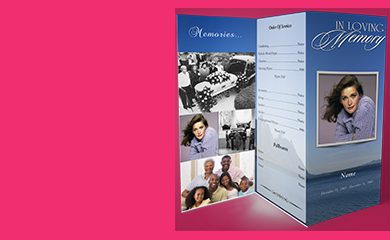
The Funeral Program is a document that describes important points of funeral or commemoration services. It serves as a guide for organizing and presenting information about the deceased, the order of events, and any readings, prayers, or music that will be included in the service.

Generally, these templates include sections like:

Cover: It displays a photo of the deceased, their name, and important dates like date of birth and death.

Order of Service:  This outlines the sequence of events during the service, including prayers, songs, eulogies, and any other planned activities.

Biography: It includes a brief summary of the life and accomplishments of the deceased, with important milestones, interests, and meaningful relationships.

Photos and Memories: Allows for the inclusion of additional photos, quotes, or memories shared by family and friends.

Funeral Details: Provides information about the location, date, and time of the service, as well as any specific instructions or requests from the family.

Acknowledgments:  In this, you can express gratitude to those who provided support and assistance during the difficult time.


Are you looking to have a lot of options for choosing free funeral program templates to create funeral programs for your loved one? These templates are available in different sizes. You can select your required size and number of pages to start customizing.

Use free funeral poems to create a good funeral program card. Funeral Card Templates are easy to customize using online drag-drop-based software where you can add unlimited text and images. You can choose from free funeral program background images, funeral sentiments, and funeral ornaments to create a beautiful funeral program using a funeral card template.

Instant Download of your Work

Print anywhere - anytime

Dedicated Live Support

Free Customization Service