If you’ve ever tried to print a funeral program at home, you already know the struggle: the wrong paper weight can make text look thin, photos fade, and folding look messy. The good news is that getting a neat, respectful memorial doesn’t have to be complicated. In this guide, you’ll learn what funeral program paper weight to choose, how to pick the right cardstock or paper for your layout, and how to set up printing settings so your programs come out crisp and easy to assemble.
What is funeral program paper weight, and why does it matter?
“Paper weight” usually refers to how thick or sturdy the stock is, commonly measured as gsm (grams per square meter) or in lb text/cover for printer-friendly paper. For funeral programs, it matters because it affects:
- Readability (ink density and how sharp text appears)
- Feel and fold quality (especially for tri-fold or bi-fold designs)
- Printer compatibility (some home printers struggle with heavier stock)
If you want a quick starting point, you can use the same approach recommended in funeral program paper weight recommendations for easy printing and a neat memorial.
Best ways to choose the right paper weight for easy printing
The best paper weight depends on your printer, your design, and how you’ll fold and assemble the programs. Use these practical checkpoints to choose confidently:
- Identify your program style: single-page handouts, bi-fold, or tri-fold.
- Check your printer capability: look for “recommended paper thickness” or “paper weight” in the printer manual.
- Consider the content: text-heavy programs typically need less thickness than photo-heavy layouts.
- Think about handling: if people will hold the program throughout a service, slightly sturdier paper helps.
In most cases, you’ll get the cleanest results when you aim for a balance of crisp text and printer-friendly thickness.
Recommended funeral program paper weight by format (bi-fold, tri-fold, and single-page)
Below are realistic recommendations that work well for many home and office printing setups. Use them as a baseline, then adjust based on your printer and design.
Single-page funeral programs (handouts)
- 80–100 gsm: great for standard text and quick printing.
- 100–120 gsm: better for photo clarity and a more polished feel.
Bi-fold funeral programs (two panels)
- 90–110 gsm: usually easiest to fold neatly without cracking.
- 120 gsm: adds structure but may require careful printer settings.
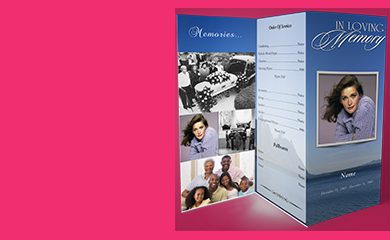
Tri-fold funeral programs (three panels)
- 90–105 gsm: commonly the sweet spot for clean folding.
- 110–120 gsm: workable for sturdiness, but use lighter margins and test folds.
If you’re unsure whether you should go heavier for a tri-fold, start closer to 90–105 gsm for smoother folding and fewer printing hiccups.
How to avoid smudging, fading, and “thin text” on heavier paper
Paper weight affects how ink sits on the page. Heavier paper can look more professional, but only if your printer settings match the stock.
Try these steps before printing the final batch:
- Print a test page using your exact paper weight and your actual design.
- Select the correct paper type (often “plain,” “thick,” or “photo”).
- Adjust density or darkness if your text looks light.
- Give ink time to dry before stacking programs to reduce smears.
For guidance that connects paper weight to printing ease, refer back to funeral program paper weight recommendations for easy printing and a neat memorial, especially if you’re printing at home and want fewer surprises.
What paper weight is best for “neat memorial” results (crisp folds + professional appearance)?
If your goal is a memorial program that feels dignified, folds cleanly, and prints reliably, many families choose a medium range. A common target is:
- 100–110 gsm for most home-printed bi-folds and tri-folds
- 100–120 gsm when you have multiple photos or want a sturdier handout
This range often balances sharp readability with easy handling, helping your programs look consistent and well cared for.
Do you need cardstock for funeral programs?
Cardstock can look premium, but it isn’t always ideal for folding or home printers. Here’s a simple way to decide:
- Choose lighter paper (about 80–110 gsm) if you need easy folding.
- Consider heavier paper (around 120 gsm) if your program is single-page or you confirm your printer handles it well.
- Avoid very heavy cardstock for tri-fold programs unless you’ve tested it—thicker stock can crack along folds or cause feed issues.
If you want the best match for your printer and layout, paper weight planning is worth doing early—especially if you’re printing multiple copies. Learning about paper weight options in funeral program paper weight recommendations for easy printing can save time later.
Final checklist for easy printing and neat assembly
Before you hit “print,” use this quick checklist to keep everything neat and consistent:
- Test once with the same paper weight and printer settings.
- Check alignment and margins (folded edges look best when content stays safely inside).
- Verify fold lines in your design file, especially for tri-fold layouts.
- Stack and handle carefully after printing to prevent smudging.
Choosing the right funeral program paper weight is one of the fastest ways to get a polished, respectful result without stress. Aim for printer-friendly stock in the 90–120 gsm range depending on your format, run a quick test print, and match your printer settings to the paper type. With that approach, you’ll get crisp text, clean folds, and a memorial program that looks beautifully organized.
{
“FAQPage”: {
“mainEntity”: [
{
“question”: “What is funeral program paper weight, and why does it matter?”,
“acceptedAnswer”: {
“text”: “Paper weight (often measured in gsm or lb) affects readability, fold quality, and printer compatibility. Choosing the right weight helps your text look crisp and your programs fold neatly without cracking.”
}
},
{
“question”: “How to avoid smudging, fading, and “thin text” on heavier paper?”,
“acceptedAnswer”: {
“text”: “Print a test page with your exact paper weight, select the correct paper type in printer settings, adjust density/darkness if text appears light, and allow ink time to dry before stacking programs.”
}
},
{
“question”: “What paper weight is best for “neat memorial” results (crisp folds + professional appearance)?”,
“acceptedAnswer”: {
“text”: “For many home-printed programs, a strong target is 100–110 gsm for most bi-fold and tri-fold layouts, or 100–120 gsm when you have more photos and want extra sturdiness.”
}
}
]
}
}