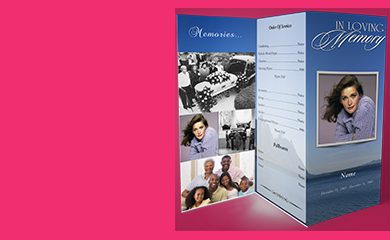
Planning a funeral program can feel overwhelming—especially when you’re trying to make everything look clear, respectful, and ready to print on time. One of the biggest “gotchas” is getting the right funeral program size and making sure your layout will fold correctly. In this guide, you’ll learn the common standard dimensions, how to choose a size for different folding styles, and practical steps to prepare your file so it prints cleanly.
What is the standard funeral program size for printing?
There isn’t one universal size used for every venue or faith tradition, but most funeral programs follow widely accepted print formats. Understanding the typical standard dimensions helps you avoid awkward scaling and makes it easier for printers to set margins and folding tolerances.
In practice, many programs are designed around common paper sizes so they’re easier to produce. If you’re comparing options, you may also want to learn more about Funeral Program Size Standard Dimensions Guide for Printing and Folding so you can match your layout to what printers commonly expect.
Common dimensions you’ll see most often
- Half-fold programs are frequently built around a layout that ends up around 5.5″ x 8.5″ when folded.
- Tri-fold programs often align with a folded size around 8″ x 5.33″ (depending on the panel widths).
- Letter-size (simple panel) formats may use 8.5″ x 11″ for a full-page look when folding isn’t needed.
Exact numbers can vary based on how many panels you use and how your printer sets safe margins, but these ranges cover the majority of mainstream programs.
How to choose funeral program size based on folding style
The best size is the one that fits your content without crowding. Before you decide, think about your folding style and how many sections you want on each panel (order of service, obituary, photo, readings, etc.).
Half-fold (bi-fold) sizing tips
- Half-fold layouts usually feel clean and readable because you get a larger “front” and “back” page.
- Use half-fold if you expect mostly text with one or two photos—this keeps spacing comfortable.
- Plan your design so key lines (names, dates, service details) appear within the safe printing area.
Tri-fold sizing tips
- Tri-fold programs are ideal when you have more content and want panels for sections.
- Because panels fold inward, text near fold lines should be sized and spaced to avoid looking cramped.
- Use a consistent typographic hierarchy so the reader can scan each panel easily.
Full-page (no fold) considerations
- A full-page program works well when you want a straightforward layout for smaller services or events.
- Make sure you leave room for photos and keep margins generous for a polished look.
What printer-friendly dimensions should you use?
To get the best results, focus on dimensions and margins that are compatible with your print provider. A common issue is designing to the edge of the page—then important text gets cut off or folds awkwardly.
Set margins and bleed correctly
Before exporting your PDF, confirm three things: trim size, bleed, and safe margins. Even if you choose a standard funeral program size, printers still need those settings to produce accurate cuts and folds.
- Trim size: Match the finished size you selected for folding (what the reader holds).
- Bleed: Extend background colors or full-bleed images slightly beyond the trim edges.
- Safe margin: Keep essential text and logos away from edges so they won’t end up too close to trimming or folds.
How many pages and folds affect layout?
When you add pages, you’re not just increasing content—you’re increasing the risk of misalignment. To keep everything consistent:
- Keep panel widths consistent across every page.
- Use guides in your design tool so fold lines land where expected.
- Double-check that page order matches how the printer will staple or fold.
Best ways to format a funeral program for easy folding
A good program doesn’t just look right—it folds right. These practical steps help you avoid the most common printing problems.
Step-by-step: Preparing your file
- Choose your finished size first: Decide on the final folded dimensions before placing text and photos.
- Create fold guides: Add vertical fold lines (for tri-fold) or a center fold line (for bi-fold).
- Place text with “reader flow” in mind: Put names, service times, and readings on panels that the reader will naturally see without re-opening awkwardly.
- Check font size and line spacing: Larger type improves readability and reduces the risk of crowding near fold areas.
- Export a print-ready PDF: Ensure your PDF preserves fonts, images, and page size settings.
Helpful proofreading checklist
- Verify the date, start time, and location are correct on the first panel.
- Confirm spelling of names and the list of readings or pallbearers.
- Look at fold lines in your preview—make sure no critical text crosses them.
- Check that photos are not cut off by margins or panel edges.
How to confirm the right funeral program size before you print
If you’re unsure, the safest approach is to confirm with your printer using the same terminology they use. Ask about their preferred trim size, how they handle bleed, and what they consider a “safe” text distance from edges and fold lines.
It also helps to compare your plan to a trusted reference for funeral program size standard dimensions for printing and folding, especially if you’re building a template from scratch.
Summary: Choose the right size, then design for the fold
When you select the correct funeral program size standard dimensions and build your layout around your folding style, the finished program looks more professional and feels easier to read. Focus on trim size, set proper margins and bleed, and use fold guides so your text lands exactly where it should. With these steps, you’ll be able to print a funeral program that’s aligned, legible, and ready for the moment it’s needed.
{
“FAQPage”: [
{
“question”: “What is the standard funeral program size for printing?”,
“answer”: “There isn’t one universal size, but many funeral programs use common print formats such as half-fold layouts that often finish around 5.5″ x 8.5″, tri-fold layouts that often finish around 8″ x 5.33″, and full-page letter formats around 8.5″ x 11″. Exact dimensions can vary with panel design and printer tolerances.”
},
{
“question”: “How to choose funeral program size based on folding style?”,
“answer”: “Choose the size by thinking about how your content will fit across panels. Half-fold (bi-fold) is great for a clean front/back layout, tri-fold works well for more sections because you can dedicate panels to different content, and full-page (no fold) can be simpler when you want a straightforward single-page look. Always keep key details away from fold lines.”
},
{
“question”: “What printer-friendly dimensions should you use?”,
“answer”: “Use settings that match your printer’s expectations by setting trim size for the finished folded program, adding bleed for full-bleed backgrounds/images, and using safe margins so essential text and logos won’t be cut off or look too close to trimming/folding.”
}
]
}