Funeral Program Paper Weight Recommendations for Easy Printing and a Neat Memorial – Helpful Guide & Resources

If you’ve ever tried to print a funeral program at home, you already know the struggle: the wrong paper weight can make text look thin, photos fade, and folding look messy. The good news is that getting a neat, respectful memorial doesn’t have to be complicated. In this guide, you’ll learn what funeral program paper weight to choose, how to pick the right cardstock or paper for your layout, and how to set up printing settings so your programs come out crisp and easy to assemble.

What is funeral program paper weight, and why does it matter?

β€œPaper weight” usually refers to how thick or sturdy the stock is, commonly measured as gsm (grams per square meter) or in lb text/cover for printer-friendly paper. For funeral programs, it matters because it affects:

  • Readability (ink density and how sharp text appears)
  • Feel and fold quality (especially for tri-fold or bi-fold designs)
  • Printer compatibility (some home printers struggle with heavier stock)

If you want a quick starting point, you can use the same approach recommended in funeral program paper weight recommendations for easy printing and a neat memorial.

Best ways to choose the right paper weight for easy printing

The best paper weight depends on your printer, your design, and how you’ll fold and assemble the programs. Use these practical checkpoints to choose confidently:

  1. Identify your program style: single-page handouts, bi-fold, or tri-fold.
  2. Check your printer capability: look for β€œrecommended paper thickness” or β€œpaper weight” in the printer manual.
  3. Consider the content: text-heavy programs typically need less thickness than photo-heavy layouts.
  4. Think about handling: if people will hold the program throughout a service, slightly sturdier paper helps.

In most cases, you’ll get the cleanest results when you aim for a balance of crisp text and printer-friendly thickness.

Recommended funeral program paper weight by format (bi-fold, tri-fold, and single-page)

Below are realistic recommendations that work well for many home and office printing setups. Use them as a baseline, then adjust based on your printer and design.

Single-page funeral programs (handouts)

  • 80–100 gsm: great for standard text and quick printing.
  • 100–120 gsm: better for photo clarity and a more polished feel.

Bi-fold funeral programs (two panels)

  • 90–110 gsm: usually easiest to fold neatly without cracking.
  • 120 gsm: adds structure but may require careful printer settings.

Tri-fold funeral programs (three panels)

  • 90–105 gsm: commonly the sweet spot for clean folding.
  • 110–120 gsm: workable for sturdiness, but use lighter margins and test folds.

If you’re unsure whether you should go heavier for a tri-fold, start closer to 90–105 gsm for smoother folding and fewer printing hiccups.

How to avoid smudging, fading, and β€œthin text” on heavier paper

Paper weight affects how ink sits on the page. Heavier paper can look more professional, but only if your printer settings match the stock.

Try these steps before printing the final batch:

  1. Print a test page using your exact paper weight and your actual design.
  2. Select the correct paper type (often β€œplain,” β€œthick,” or β€œphoto”).
  3. Adjust density or darkness if your text looks light.
  4. Give ink time to dry before stacking programs to reduce smears.

For guidance that connects paper weight to printing ease, refer back to funeral program paper weight recommendations for easy printing and a neat memorial, especially if you’re printing at home and want fewer surprises.

What paper weight is best for β€œneat memorial” results (crisp folds + professional appearance)?

If your goal is a memorial program that feels dignified, folds cleanly, and prints reliably, many families choose a medium range. A common target is:

  • 100–110 gsm for most home-printed bi-folds and tri-folds
  • 100–120 gsm when you have multiple photos or want a sturdier handout

This range often balances sharp readability with easy handling, helping your programs look consistent and well cared for.

Do you need cardstock for funeral programs?

Cardstock can look premium, but it isn’t always ideal for folding or home printers. Here’s a simple way to decide:

  • Choose lighter paper (about 80–110 gsm) if you need easy folding.
  • Consider heavier paper (around 120 gsm) if your program is single-page or you confirm your printer handles it well.
  • Avoid very heavy cardstock for tri-fold programs unless you’ve tested itβ€”thicker stock can crack along folds or cause feed issues.

If you want the best match for your printer and layout, paper weight planning is worth doing earlyβ€”especially if you’re printing multiple copies. Learning about paper weight options in funeral program paper weight recommendations for easy printing can save time later.

Final checklist for easy printing and neat assembly

Before you hit β€œprint,” use this quick checklist to keep everything neat and consistent:

  • Test once with the same paper weight and printer settings.
  • Check alignment and margins (folded edges look best when content stays safely inside).
  • Verify fold lines in your design file, especially for tri-fold layouts.
  • Stack and handle carefully after printing to prevent smudging.

Choosing the right funeral program paper weight is one of the fastest ways to get a polished, respectful result without stress. Aim for printer-friendly stock in the 90–120 gsm range depending on your format, run a quick test print, and match your printer settings to the paper type. With that approach, you’ll get crisp text, clean folds, and a memorial program that looks beautifully organized.

{
β€œFAQPage”: {
β€œmainEntity”: [
{
β€œquestion”: β€œWhat is funeral program paper weight, and why does it matter?”,
β€œacceptedAnswer”: {
β€œtext”: β€œPaper weight (often measured in gsm or lb) affects readability, fold quality, and printer compatibility. Choosing the right weight helps your text look crisp and your programs fold neatly without cracking.”
}
},
{
β€œquestion”: β€œHow to avoid smudging, fading, and β€œthin text” on heavier paper?”,
β€œacceptedAnswer”: {
β€œtext”: β€œPrint a test page with your exact paper weight, select the correct paper type in printer settings, adjust density/darkness if text appears light, and allow ink time to dry before stacking programs.”
}
},
{
β€œquestion”: β€œWhat paper weight is best for β€œneat memorial” results (crisp folds + professional appearance)?”,
β€œacceptedAnswer”: {
β€œtext”: β€œFor many home-printed programs, a strong target is 100–110 gsm for most bi-fold and tri-fold layouts, or 100–120 gsm when you have more photos and want extra sturdiness.”
}
}
]
}
}

Create a Simple Beautiful Funeral Program in Minutes

Personalize, preview, and download instantly with our easy-to-use Funeral Program Wizard.

Start Now β†’

Our Obituary Resources are changing the way to create

Whether you're drafting your first obituary or looking to create a unique commemoration, our detailed guides, templates, and examples are here to support you every step of the way. Explore the links below to find everything from basic templates to detailed instructions on obituary writing, ensuring that you can honor your loved one with respect and love.

Navigating Grief with Thoughtful Resources

When a loved one passes away, handling the emotional and practical aspects of grief can be overwhelming. At Quick Funeral, we provide comprehensive resources to assist you through this difficult time. Whether you're beginning with understanding how to craft meaningful tributes or need a detailed guide, we're here to support you.

Writing and Understanding Obituaries

Learning how to write an obituary is a valuable skill that honors the deceased and informs the community of their passing. This process involves more than just penning down life facts. For more insights into the nuances, our article on how obituaries are written provides clarity on capturing the essence of a loved one’s life story.

Templates and Samples to Ease the Process

If you're looking for a starting point, our Template of Obituary and Obituary Template for Word are perfect tools to help you get started. These templates are designed to guide you through the structure and content, making the writing process less daunting. For varied examples, check out our comprehensive Obituary Template Sample and Obituary Writing Example, which can inspire you to personalize a memorial that feels true to the spirit of your loved one.

Exploring different formats can also be helpful. Our guide on Obituary Format Example outlines the different ways you can present an obituary, from traditional to more modern approaches. Additionally, for those looking to express sentiments with different phrasing, the Obituary Wording Example can be particularly useful.

Advanced Tools and Creative Ideas

For families preferring to use digital tools, our Obituary Template Microsoft Word is easily customizable. Moreover, those wishing to create a lasting tribute can explore our Obituary Card Template, which offers a tangible memento for funeral attendees.

Memorializing a loved one involves reflecting on their unique life story. To help capture these narratives, we offer resources like the Obituary Tribute Examples and Obituary Announcement Sample, which provide ideas for announcing the passing in a respectful and heartfelt manner.

Further Exploration and Support

For those new to obituary writing or seeking to improve their skills, Template for Obituary and Examples for Obituary offer a deep dive into crafting impactful memorials. Recognizing that each family's needs are different, we also provide resources tailored to specific scenarios, such as Obituary Readings and detailed guides on Obituaries Format.

At Quick Funeral, our goal is to support you through these challenging times with resources that not only guide but also inspire personal and heartfelt commemorations. Whether you're drafting a simple Obituary Template or seeking comprehensive Example of Obituary, our tools are designed to reflect the dignity and life of your loved one. Explore our full suite of resources, including Sample Obituary and Samples of Obituaries for more insights.

For families looking to create a personalized tribute, our Family Obituary Samples provide a touch of personalization that celebrates the unique life of the deceased.

Example of Obituary

When a loved one passes away, writing an obituary can be one of the most challenging tasks. It serves as both a tribute and a vital means of informing others about the loss. An obituary example can help guide you through this emotional process, offering a framework for creating a meaningful and respectful message. A well-crafted obituary typically includes important details such as the person's name, date of birth, date of death, family members, and funeral arrangements. Additionally, a heartfelt obituary often highlights the deceased's personality, achievements, and contributions to their community. Using a thoughtful example of obituary can provide structure and inspiration to create a compassionate and personalized tribute. Whether you’re writing for a family member or a close friend, having a reliable example of obituaries can simplify the process and ensure that the tribute captures the essence of the person’s life. If you're unsure where to start, you can explore various examples of obituaries to find a style that suits the individual's story. For more guidance and examples, visit our Example of Obituary page to find templates, tips, and expert advice on how to write the perfect obituary. We’re here to help you honor your loved one’s memory with grace and dignity.

The Funeral Program is a document that describes important points of funeral or commemoration services. It serves as a guide for organizing and presenting information about the deceased, the order of events, and any readings, prayers, or music that will be included in the service.

Generally, these templates include sections like:

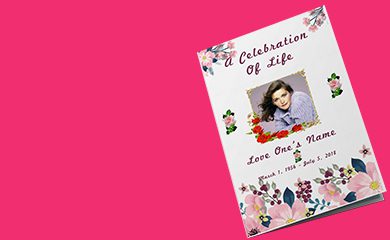
Cover: It displays a photo of the deceased, their name, and important dates like date of birth and death.

Order of Service:  This outlines the sequence of events during the service, including prayers, songs, eulogies, and any other planned activities.

Biography: It includes a brief summary of the life and accomplishments of the deceased, with important milestones, interests, and meaningful relationships.

Photos and Memories: Allows for the inclusion of additional photos, quotes, or memories shared by family and friends.

Funeral Details: Provides information about the location, date, and time of the service, as well as any specific instructions or requests from the family.

Acknowledgments:  In this, you can express gratitude to those who provided support and assistance during the difficult time.


Are you looking to have a lot of options for choosing free funeral program templates to create funeral programs for your loved one? These templates are available in different sizes. You can select your required size and number of pages to start customizing.

Use free funeral poems to create a good funeral program card. Funeral Card Templates are easy to customize using online drag-drop-based software where you can add unlimited text and images. You can choose from free funeral program background images, funeral sentiments, and funeral ornaments to create a beautiful funeral program using a funeral card template.

Instant Download of your Work

Print anywhere - anytime

Dedicated Live Support

Free Customization Service