








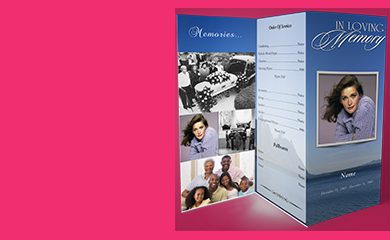

The Funeral Program is a document that describes important points of funeral or commemoration services. It serves as a guide for organizing and presenting information about the deceased, the order of events, and any readings, prayers, or music that will be included in the service.
Generally, these templates include sections like:
Cover: It displays a photo of the deceased, their name, and important dates like date of birth and death.
Order of Service: This outlines the sequence of events during the service, including prayers, songs, eulogies, and any other planned activities.
Biography: It includes a brief summary of the life and accomplishments of the deceased, with important milestones, interests, and meaningful relationships.
Photos and Memories: Allows for the inclusion of additional photos, quotes, or memories shared by family and friends.
Funeral Details: Provides information about the location, date, and time of the service, as well as any specific instructions or requests from the family.
Acknowledgments: In this, you can express gratitude to those who provided support and assistance during the difficult time.
Are you looking to have a lot of options for choosing free funeral program templates to create funeral programs for your loved one? These templates are available in different sizes. You can select your required size and number of pages to start customizing.
Use free funeral poems to create a good funeral program card. Funeral Card Templates are easy to customize using online drag-drop-based software where you can add unlimited text and images. You can choose from free funeral program background images, funeral sentiments, and funeral ornaments to create a beautiful funeral program using a funeral card template.